
Stratasys Material Price List (92ci)
If you operate a Stratasys Fortus system, understanding material pricing is critical for budgeting, quoting, and production planning. Stratasys does not publish a public price list, and material costs can vary by region, dealer, and contract.
Below is a consolidated overview of typical Stratasys Fortus 92ci material pricing, including estimated cost per cubic inch, to help Fortus users better understand where material costs come from and how they compare across material types.
| Stratasys Material | Type | Typical OEM $/92ci | Estimated $/ci | Notes |
|---|---|---|---|---|
| ABS-M30 | Model | $454.00 | $4.93 | General-purpose production material |
| ABS-ESD7 | Model | $522.00 | $5.67 | ESD-safe ABS for fixtures and housings |
| ASA | Model | $454.00 | $4.93 | UV-stable, outdoor-capable thermoplastic |
| PC | Model | $522.00 | $5.67 | Higher strength and heat performance |
| PC-ABS | Model | $522.00 | $5.67 | Balanced toughness and heat resistance |
| Nylon 12CF | Model | $774.00 | $8.41 | Carbon fiber reinforced nylon for stiffness |
| PPSF | Model | $897.00 | $9.75 | High heat chemical resistance (Fortus) |
| ULTEM™ 9085 | Model | $887.00 | $9.64 | Aerospace-capable high-performance PEI |
| ULTEM™ 1010 | Model | $887.00 | $9.64 | Higher temperature PEI for tooling and sterilization |
| Antero 800NA | Model | $1,547.00 | $16.82 | High-performance PEKK (Fortus/F900) |
| SR-35 | Support | $454.00 | $4.93 | Soluble support for ABS/ASA workflows |
| SR-100 | Support | $567.00 | $6.16 | Support material for PC applications |
| SR-20 | Support | $567.00 | $6.16 | Support for PC-ABS applications |
| ULTEM™ 9085 Support | Support | $842.00 | $9.15 | Support material for ULTEM™ 9085 builds |
| ULTEM™ 1010 Support | Support | $842.00 | $9.15 | Support material for ULTEM™ 1010 builds |
Key takeaway
Use 92 in³ pricing to budget and quote accurately
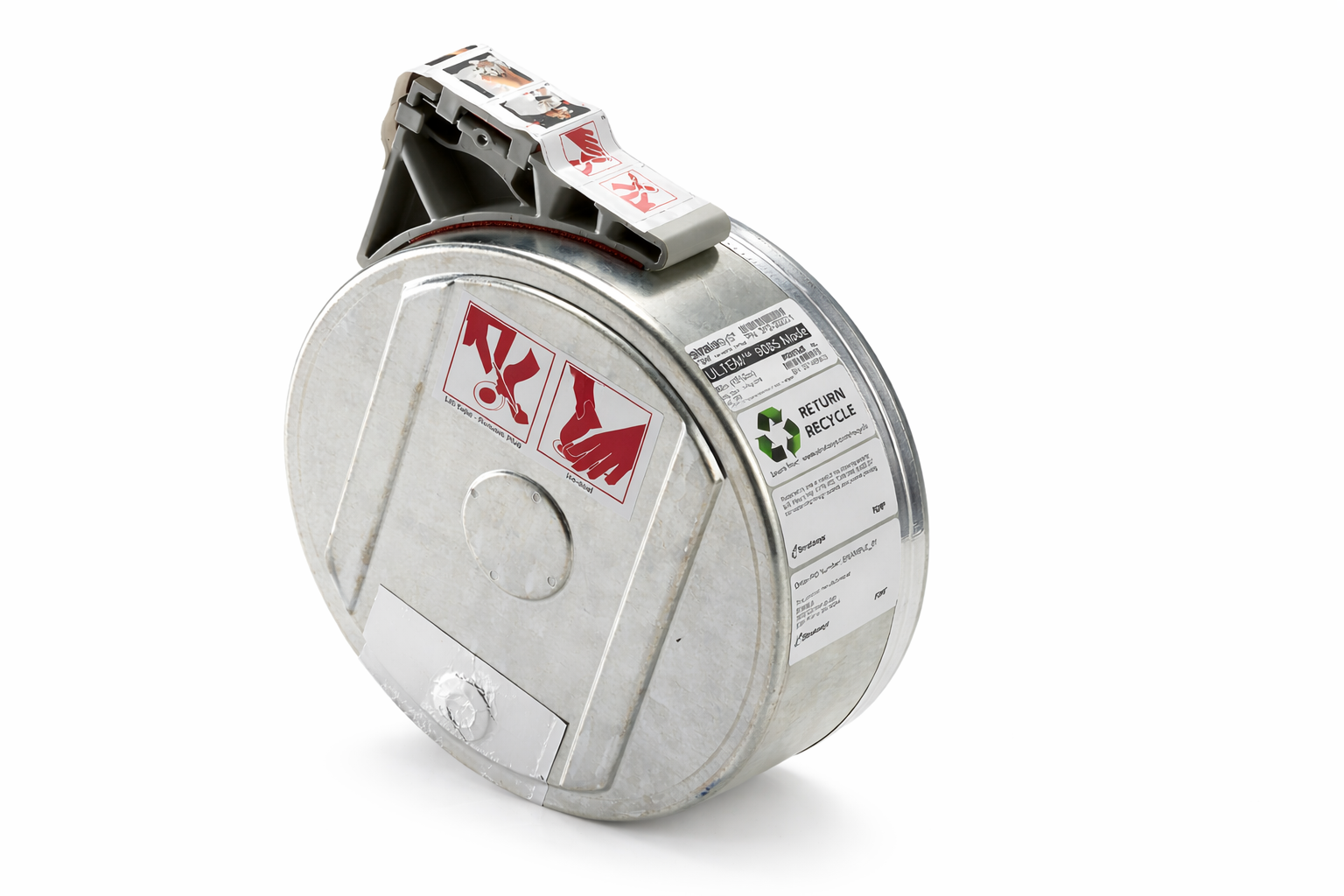
Stratasys® Fortus® Plus canisters are commonly treated as 92 in³ of usable volume. Converting pricing to $/in³ makes OEM pricing comparable across materials and helps estimate part cost before printing.
- Best for: quoting, estimating part cost, and comparing material families.
- Next level: translate volume-based cost to $/kg using material density (procurement-friendly).
- Remember: OEM pricing varies by region, dealer, and contract.
Related resources
Jump between pricing tables and tools to estimate part cost, compare purchasing economics, and plan Fortus® production.