
Stratasys Fortus 450mc
The Stratasys Fortus® 450mc is, in the ways buyers usually care about most, the newer version of the Fortus 400mc. Same basic machine class. Same build size. Same role in the Fortus lineup. But it is not just a 400mc with a different badge.
The real difference is that the 450mc shares very little in terms of part-number overlap with the 400mc. So when deciding between a 400mc and a 450mc, the smarter conversation is usually not “which spec sheet looks better?” It is “who is servicing it, what parts path exists, and what machine ecosystem are we buying into?”
The 450mc is still not EOL with Stratasys, which lowers some OEM-side risk. At the same time, the 400mc has built up much stronger third-party repair development and more alternative support options. So the 450mc vs 400mc decision is a balance, not a slam dunk.
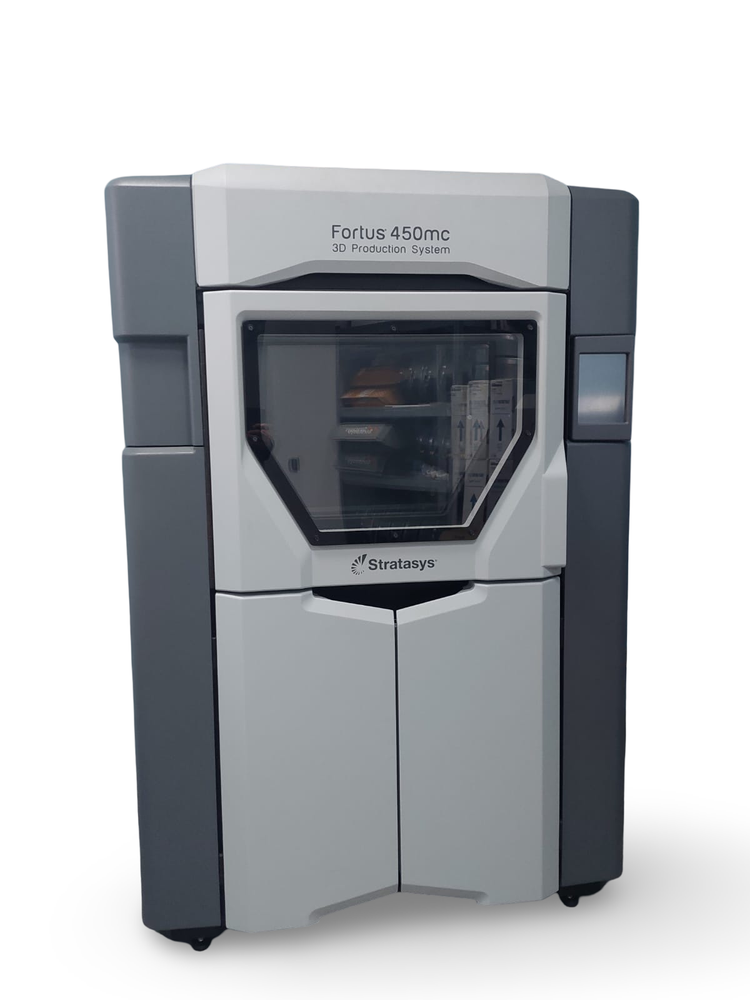
The Fortus 450mc is not automatically the better buy than a 400mc. It is the newer version of the same general machine class, but the decision usually comes down to service path, parts availability, and what support ecosystem you trust most.
Same machine class as the 400mc, but not the same ownership story
On paper, the 450mc and 400mc sit in the same spot. The build size is effectively the same and the platform role is the same. But once you move past that, they diverge quickly in practical ownership terms.
Same size class
The 450mc occupies the same general Fortus slot as the 400mc. For buyers looking at capacity and machine role, they are very closely related.
Different parts ecosystem
This is where it gets real. The 450mc may be the newer machine, but it does not just drop into the 400mc parts world. That changes how serviceability should be evaluated.
More modern presentation
The 450mc looks newer, feels newer, and the touchscreen absolutely helps the machine present better. That matters more than some buyers want to admit.
The case for another 400mc
- If you already own a 400mc, another 400mc can simplify parts, familiarity, and service strategy.
- The 400mc benefits from stronger third-party repair development.
- There are more independent repair paths and alternative support options around the 400mc platform.
- For some buyers, mature ecosystem support matters more than having the newer-looking machine.
The case for the 450mc
- The 450mc is not EOL with Stratasys, which reduces some OEM support risk.
- The machine looks better and feels more current in a production environment.
- The touchscreen is a genuine usability and presentation upgrade.
- For buyers prioritizing OEM-side support continuity, the 450mc can make a lot of sense.
It is a balance between OEM risk and independent service flexibility
The 450mc is a little less risky on the Stratasys side because it is still an actively supported model. But the 400mc has a stronger independent ecosystem around repairs and parts development. So the answer is not universal. It depends on how you plan to own the machine.
The 450mc is still supported within Stratasys’ current ecosystem.
The 400mc has more third-party repair maturity and alternative service development.
The better machine is often the one with the better service and parts story behind it.
Core specs buyers actually care about
The Fortus 450mc build envelope is 16 x 14 x 16 inches, putting it in the same general size class buyers already know from the 400mc conversation. The machine remains a very relevant industrial FDM platform in that mid-large Fortus category.
406 x 355 x 406 mm industrial Fortus build envelope.
High-requirement prototypes, tooling, and end-use parts in a proven Fortus size class.
The touchscreen helps the 450mc feel newer and present better than earlier Fortus generations.
Used Fortus 450mc pricing depends on condition, hours, included accessories, software situation, and what level of service work has been done before sale. But as a general target, the 450mc tends to sit around the $40,000 mark.
Used, serviced, and refurbished all matter here too
A Fortus 450mc can be a very smart buy, but the definition of a good buy depends on how the machine is being sold and who is standing behind it afterward.
- Used Fortus 450mc: good value if the machine is clean and the support path is clear.
- Serviced Fortus 450mc: better for buyers who want stronger confidence up front.
- Refurbished Fortus 450mc: strongest option for buyers prioritizing readiness and presentation.
- Warranty options: especially relevant when parts availability and service path are part of the decision.
Support path, parts path, and hours
Because the 450mc is not simply a 400mc underneath, buyers need to look carefully at how the machine will actually be supported after purchase.
- Total machine hours and overall wear
- Who has been servicing the unit
- What OEM support path exists
- What independent repair options exist
- Whether the parts strategy makes sense long term
The smarter question is not “which one is newer?”
The smarter question is usually: what kind of ownership model are you trying to build? If you already run 400mc machines, another 400mc might actually be the better fleet decision. If you want a newer machine that still sits within Stratasys’ active support world, the 450mc gets stronger.
Fleet consistency can matter more than machine age
If you already have 400mc infrastructure, service familiarity, and spare strategy, adding another 400mc can still be the smarter move.
Active OEM support still matters
The 450mc benefits from not being EOL with Stratasys. That can matter a lot depending on the buyer.
The best machine is the one you can actually support
The 450mc vs 400mc conversation is not really about specs. It is about support confidence, parts strategy, and long-term practicality.
Explore Fortus support, materials, and machine comparisons
These pages help round out the Fortus 450mc ownership conversation, especially if you are comparing it directly against a 400mc or planning long-term Fortus support strategy.
Fortus 450mc questions
Is the 450mc basically the newer 400mc?
Yes, in broad machine-positioning terms. Same general slot, same general build class, and the same kind of buyer conversation. But the machine ecosystem is not the same underneath.
Does the 450mc share the same parts ecosystem as the 400mc?
No. That is one of the most important practical differences. The decision is not just about specs. It is about how the machine will be serviced and supported.
Is the 450mc less risky than the 400mc?
On the OEM side, yes, because it is still not EOL with Stratasys. But the 400mc has stronger third-party repair maturity, so the real answer depends on what type of support model you prefer.
When should someone choose a 400mc instead?
Often when they already own a 400mc and want to stay in the same service and parts ecosystem, or when independent repair flexibility is a major priority.
Looking for a used, serviced, or refurbished Fortus 450mc?
Reach out for current availability, machine condition, included accessories, support path, and warranty options.
Ask About Current MachinesAlready own one and want better support or lower operating cost?
The value of this platform is not just buying it. It is owning it well through support, service strategy, materials, and practical Fortus knowledge.
Talk to NEXT 3DP